Factor or CookUnity for people who don’t cook?
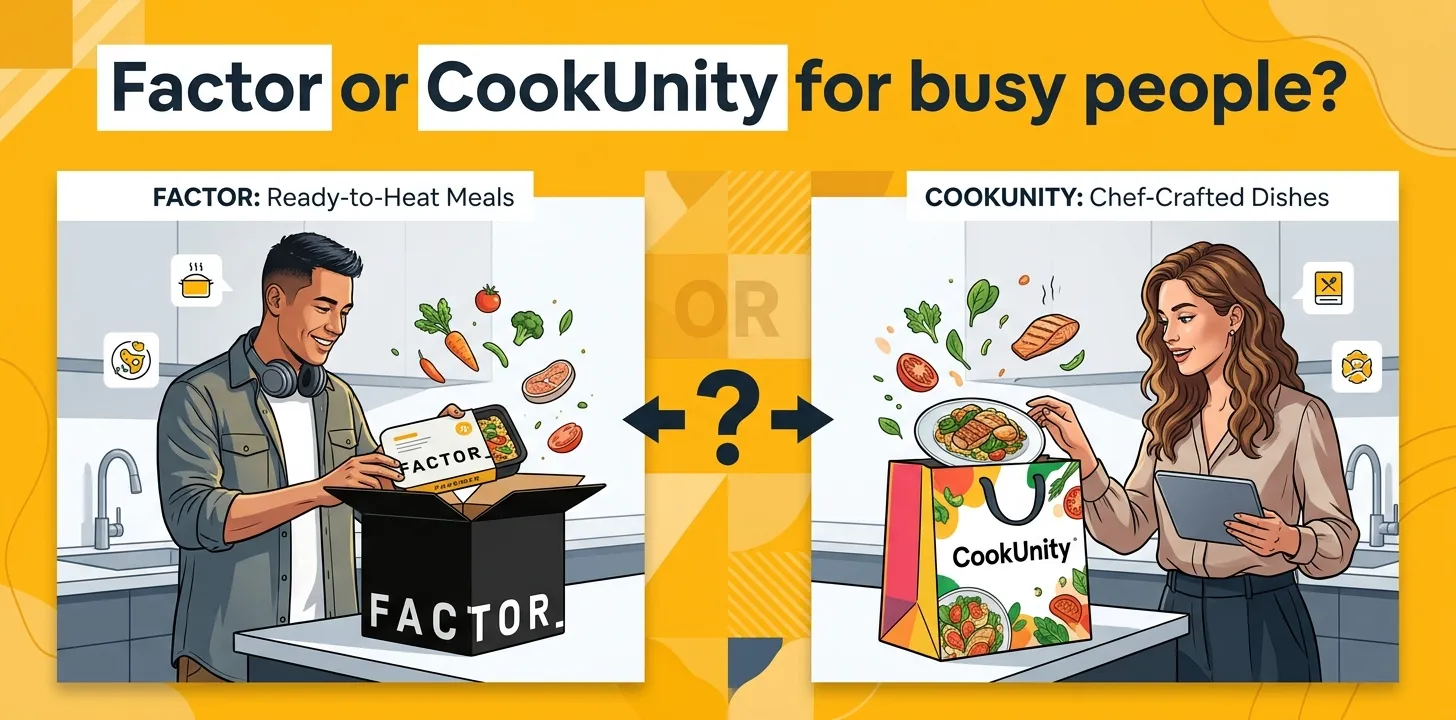
If you don’t cook and want meals that require almost no effort, both Factor and CookUnity are strong options because they deliver fully prepared meals that only need reheating. Factor is the better fit for people who value structured nutrition and simple routines, while CookUnity is a better choice if taste, chef variety, and restaurant-style meals matter more.
Factor vs. CookUnity at a Glance
| Factor | CookUnity |
|---|---|
| Fully prepared meals | Fully prepared meals |
| No cooking required | No cooking required |
| Fresh, never frozen | Fresh and chilled |
| 100+ weekly meal options advertised | 300+ rotating dishes advertised |
| Strong focus on nutrition and diet plans | Strong focus on chef-created variety |
| Plans from 6 to 18 meals per week | Plans from 4 to 16 meals per week |
| Good for predictable meals | Good for trying different cuisines |
| Shipping fee applies | Delivery fee varies by ZIP code |
| Best for nutrition-focused eaters | Best for people who care about flavor and variety |
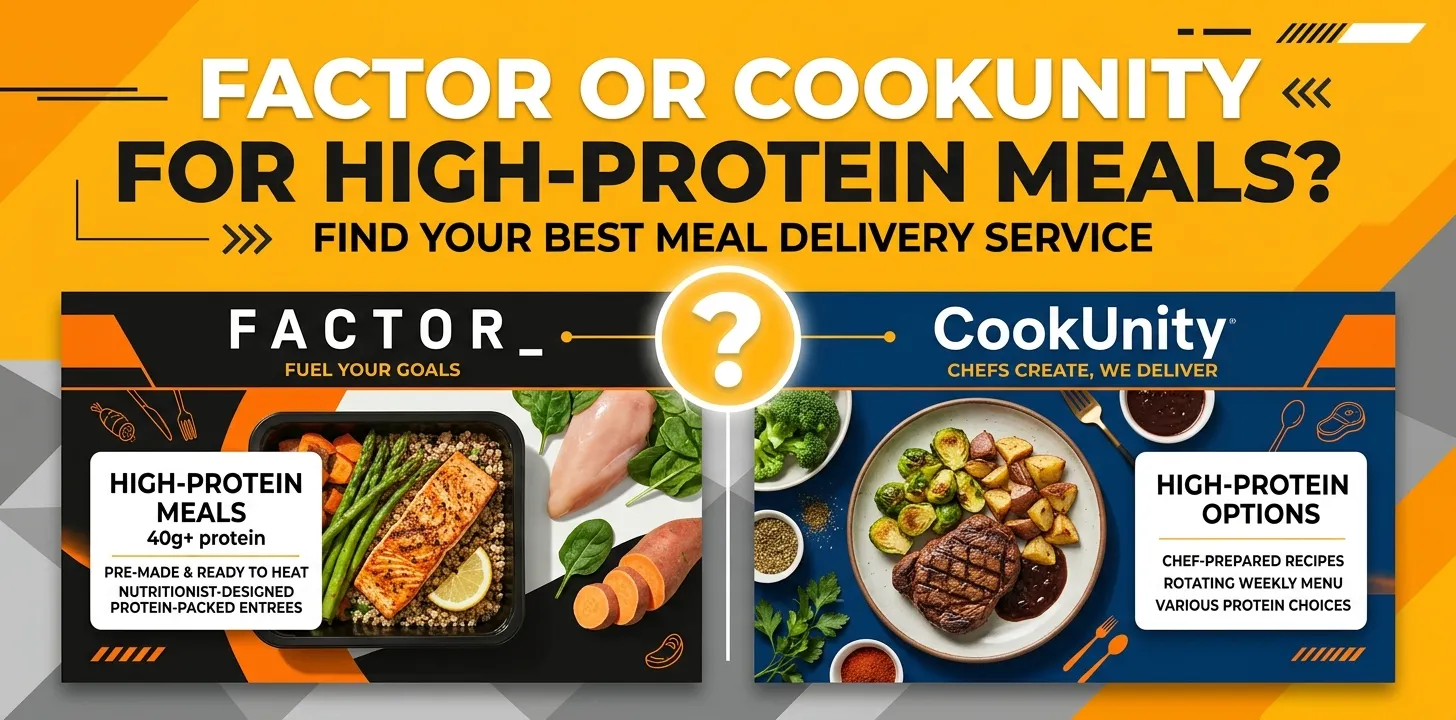
Factor says its meals arrive fresh, fully prepared, and ready to heat in about two minutes. Its current menu includes more than 100 dietitian-designed meals and options such as high-protein, Calorie Smart, keto, and vegan/vegetarian meals.
CookUnity also requires no cooking. Its meals are delivered chilled and ready to heat and plate, with current plans ranging from 4 to 16 meals per week. The company says its menu includes hundreds of dishes from professional chefs.
Which Is Better for Someone Who Doesn’t Cook?
For a person who simply wants to avoid cooking, CookUnity gets the edge for most people.
The reason is simple: when cooking is already off the table, the biggest differences become taste, variety, convenience, portion satisfaction, and how easy it is to keep enjoying the service week after week.
CookUnity puts a lot of emphasis on chef-created dishes and a large rotating menu. That can make it feel closer to ordering a prepared restaurant meal than following a traditional meal-prep plan.
Factor makes more sense if you don’t cook and you want your meals organized around specific nutrition goals. Its menu is built around dietitian-designed meals and includes categories such as high protein, Calorie Smart, keto, and vegan + veggie.
So the simplest decision is:
- Don’t cook + want more food variety: CookUnity
- Don’t cook + want nutrition-focused choices: Factor
- Don’t cook + want restaurant-style variety: CookUnity
- Don’t cook + want a simple, predictable routine: Factor
Why Factor Works Well for People Who Don’t Cook
Factor removes nearly every step between having no food and eating dinner.
You choose your meals online. The company handles the shopping, preparation, and cooking. Your meals arrive ready to heat, so there is no chopping, measuring, recipe reading, or washing a pile of pans afterward.
That makes Factor especially useful for someone who regularly thinks:
“I don’t want to cook tonight, and I don’t want to figure out what to eat.”
Factor is especially useful if nutrition matters
Factor has a stronger nutrition-planning angle than CookUnity.
Its current menu includes meals designed around different eating preferences, including high-protein, keto, Calorie Smart, and vegan/vegetarian choices. Nutrition and allergen information is also provided with individual meals.
That can save time if you normally spend a lot of effort reading labels or planning meals around certain nutrition targets.
Factor is good for a predictable routine
Imagine a person who works from home and wants lunch handled Monday through Friday.
They don’t need five different recipes. They just want five meals sitting in the refrigerator that can be heated when hunger hits.
Factor fits that kind of routine well.
The company currently allows customers to change meals, skip weeks, pause, or cancel, which is useful when your schedule changes.
Why CookUnity Works Well for People Who Don’t Cook
CookUnity takes a slightly different approach.
Instead of making nutrition structure the main selling point, it puts more emphasis on chef-created meals and variety. Its current site says customers can choose from hundreds of meals and dishes created by professional chefs.
For someone who doesn’t cook, that variety can matter a lot.
If you are already tired of eating the same frozen meals, having many cuisines and meal styles to choose from can make it easier to stay interested in the service.
CookUnity feels more like a prepared dinner
CookUnity’s model is designed around chef-crafted meals delivered chilled. You heat the meal, plate it, and eat.
The service currently offers meals across categories and cuisines including American, Italian, Latin American, vegetarian, vegan, Mediterranean, keto, and pescatarian options.
That makes CookUnity particularly appealing to someone who wants convenience without feeling like every meal is just another basic microwave dinner.
CookUnity can be better when you get bored easily
This is one of the biggest reasons to consider CookUnity.
If you don’t cook, you may already rely heavily on takeout, frozen meals, restaurants, or simple grocery-store foods. Eating the same style of meal repeatedly can get boring.
CookUnity’s large rotating selection gives you more room to change things up.
That does not mean every CookUnity meal will be your favorite. Meal preferences are personal, and customer discussions about both services show that people can have very different opinions about specific dishes.
Factor vs. CookUnity for Taste
CookUnity is the better starting point if taste is your top concern.
Current customer discussions frequently praise CookUnity for variety and flavor, while some Factor users say its meals can feel repetitive over time. Other customers report the opposite, so individual meal selection still matters.
This is an important distinction.
Factor can be very practical. But if you are replacing cooking and restaurant meals at the same time, food enjoyment becomes more important.
A service that is convenient but leaves you wanting takeout every night may not actually save you money or effort.
Factor vs. CookUnity for Variety
CookUnity wins on variety.
Factor currently advertises more than 100 weekly meal choices. CookUnity advertises more than 300 rotating dishes, with meals created by a large group of professional chefs.
For someone who doesn’t cook, this difference is meaningful.
You may not want to learn 20 recipes. You may simply want 20 different meals that someone else has already made.
CookUnity is better suited to that style of eating.
Factor vs. CookUnity for Nutrition
Factor has the clearer advantage if structured nutrition is your priority.
Factor’s current menu is organized around dietitian-designed meals and specific eating patterns. Depending on the current menu, you can look for options such as high-protein, keto, Calorie Smart, and vegan/vegetarian meals.
CookUnity also provides nutritional information and offers different dietary categories, so it is not simply a “taste over nutrition” service. But its main appeal is its chef-driven variety.
If you are choosing meals mainly by calories, protein, carbs, or a specific eating pattern, Factor may make the decision easier.
Factor vs. CookUnity for Someone Who Lives Alone
Both can work well for one person because the meals are designed as individual servings.
Factor specifically markets prepared meal delivery for one person and offers plans ranging from 6 to 18 meals per week.
CookUnity says one meal generally serves one person and offers plans from 4 to 16 meals per week.
For a single adult who doesn’t cook, this can be much easier than buying groceries for recipes that produce four or six servings.
For example, imagine someone who lives alone and works long hours. Buying chicken, vegetables, sauces, rice, spices, and other ingredients can mean planning meals, cooking them, storing leftovers, and cleaning up.
A prepared meal service removes most of that work.
Which Is More Convenient?
Both are highly convenient, but there is a small difference in what convenience means.
Factor: convenience through routine and nutrition structure.
CookUnity: convenience through meal variety and chef-prepared food.
Neither requires you to cook dinner from raw ingredients. Both deliver meals that are ready to heat and eat.
The real question is what usually stops you from cooking.
If your problem is “I don’t have time,” either can work.
If your problem is “I don’t know what to make,” either can work.
If your problem is “I get bored with prepared meals,” CookUnity may be the better choice.
If your problem is “I don’t want to think about my nutrition,” Factor may have the advantage.
What About Price?
Price can change based on the number of meals, delivery location, promotions, and other plan details, so it is better to compare the current checkout price rather than rely on an old review.
CookUnity currently advertises meals starting at $12.59 per meal before applicable delivery costs, while its pricing page says delivery is a flat $9.99 or $11.99 depending on ZIP code.
Factor charges shipping on deliveries, and its current promotional pricing can differ from the normal price after the introductory period. Its official site currently advertises a new-customer promotion, but the company states that promotions and plan pricing can vary.
That means you should compare the price after the introductory offer, not just the first-box discount.
A cheap first box does not tell you whether the service fits your long-term budget.
Freshness and Storage Matter More Than You Might Think
This is an important point for people who don’t cook.
You may be tempted to order a large number of meals because you want to avoid thinking about food for the next two weeks. But fresh prepared meals have limited refrigerator life.
Factor says its meals arrive fresh and never frozen.
CookUnity says its meals are delivered fresh and chilled and generally have a refrigerated shelf life of about 3–7 days, with the exact “use by” date shown on the package.
CookUnity also says some meals can be frozen before their use-by date, although freezing can change the texture and flavor of certain ingredients.
So if your schedule is unpredictable, don’t automatically choose the biggest weekly plan.
Order enough meals to match your actual eating habits.
Which One Should You Choose?
Here’s the practical decision:
Choose Factor if you:
- Want nutrition-focused meal choices
- Prefer a predictable weekly routine
- Want high-protein or other structured options
- Like choosing meals based on nutrition information
- Want fully prepared meals with very little effort
- Don’t mind having a more structured menu
Choose CookUnity if you:
- Care more about taste and variety
- Get bored eating the same types of meals
- Want chef-created dishes
- Enjoy trying different cuisines
- Want something closer to a prepared restaurant meal
- Don’t cook and want your meals to feel less repetitive
Two Realistic Examples
Example 1: The busy professional
Suppose a person works long hours and gets home at 7:30 p.m. They don’t want to cook, but they also want to keep an eye on protein and calories.
Factor may be the better fit because its menu is designed around nutrition-focused categories and provides detailed nutritional information.
Example 2: The person who hates meal repetition
Now imagine someone who orders takeout several times a week because they get bored with standard prepared meals.
CookUnity may be a better match because its large rotating selection and chef-created menu give that person more ways to change dinner without cooking.
Frequently Asked Questions
Is Factor or CookUnity better if I never cook?
CookUnity is generally the better choice if you want lots of variety and chef-created meals without cooking. Factor may be better if you want prepared meals organized around nutrition goals such as high protein, keto, or calorie-conscious eating.
Do you have to cook Factor or CookUnity meals?
No. Both services deliver fully prepared meals that only need reheating and, for CookUnity, plating. Factor says its meals can be heated in about two minutes, while CookUnity provides heating instructions with each meal.
Which is better for someone who gets bored with meal delivery?
CookUnity is the stronger choice if variety is your main concern. Its current menu includes hundreds of rotating dishes and meals from professional chefs, giving you more opportunities to change cuisines and meal styles from week to week.
The Bottom Line
If your only requirement is “I don’t want to cook,” both Factor and CookUnity solve the basic problem very well.
The better choice depends on what you want after the cooking disappears.
Choose Factor for structure, nutrition-focused choices, and a simple routine. Choose CookUnity for variety, chef-created meals, and a more restaurant-like experience. For most people who simply want enjoyable meals without cooking, CookUnity is the more appealing starting point.
Before committing to a large plan, try a smaller order and pay attention to the meals you actually finish. The best service is not the one with the biggest discount; it is the one that keeps you from reaching for takeout when you already have dinner in the fridge.