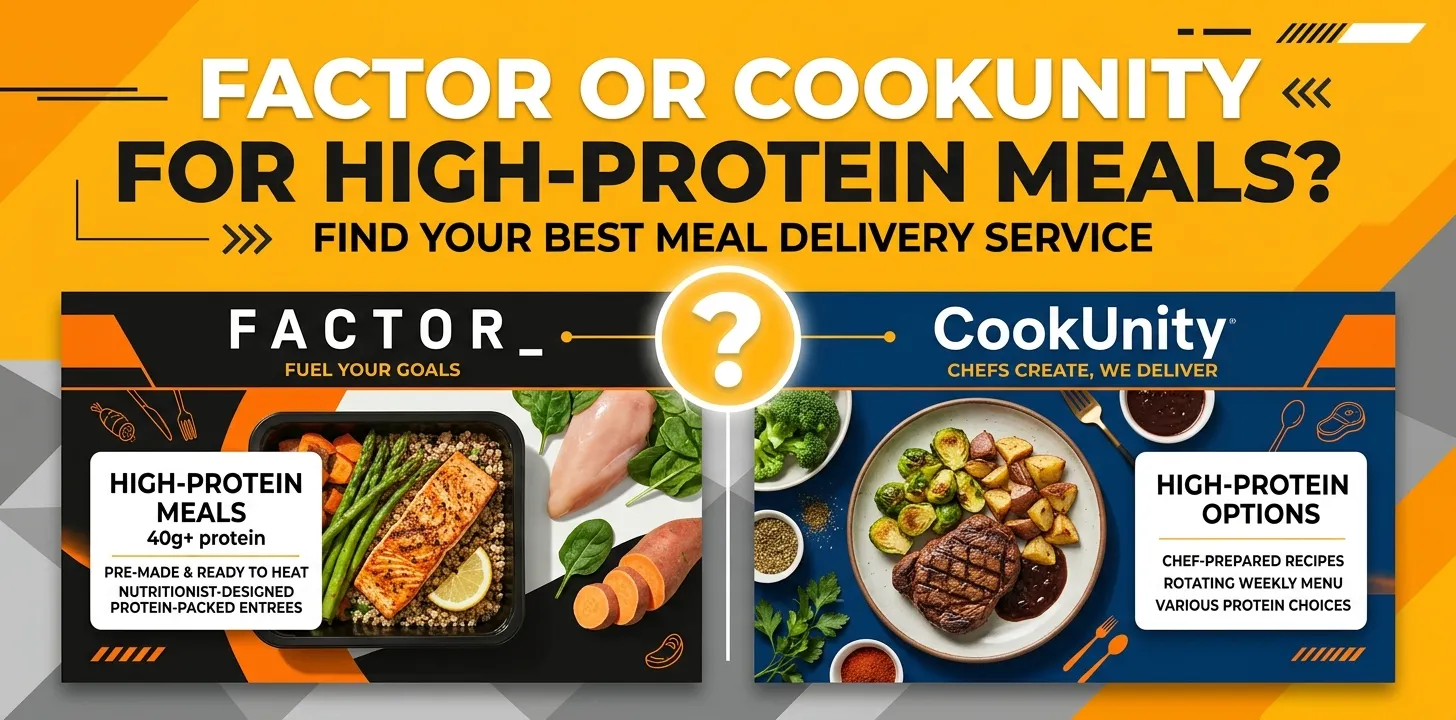
Factor or CookUnity for high-protein meals?
If your main goal is getting more protein with less cooking, Factor is the stronger choice for most high-protein shoppers. Its High Protein meals start at 30 grams of protein per serving, with some reaching 50 grams or more, and the menu is built around nutrition-focused filters. CookUnity also has a dedicated high-protein selection, usually starting around 25–30 grams per serving, but its main advantage is chef-driven variety and flavor.
The better option depends on what you mean by “high protein.” If you want to hit a specific protein target with less guesswork, Factor has the edge. If you want protein-rich meals that feel more like restaurant food, CookUnity may be more appealing.
Factor vs. CookUnity for High-Protein Meals at a Glance
| Category | Factor | CookUnity |
|---|---|---|
| High-protein focus | Strong | Strong |
| Typical high-protein starting point | 30g+ protein | 25–30g+ protein |
| Higher-protein options | Some meals reach 50g+ | Many meals can be 30g+ |
| Nutrition focus | Very strong | Strong, but more chef-focused |
| Menu style | Dietitian-designed, chef-prepared | Chef-created meals |
| Meal preparation | Heat and eat | Heat and eat |
| Menu variety | Large | Very large |
| Best for | Protein and macro tracking | Protein plus food variety |
| Fresh or frozen | Fresh, never frozen | Fresh and chilled |
| Meal plans | Includes High Protein and other nutrition goals | Flexible meal selection with dietary filters |
Factor currently promotes High Protein meals with 30g or more of protein per serving, while CookUnity’s Protein Boost meals typically provide 25–30g or more. Both services provide nutrition information for individual meals.
Why Factor Is Better for Strict Protein Goals
Factor is built around a more nutrition-first shopping experience. Its current High Protein selection is designed for meals with at least 30 grams of protein, and some meals provide 50 grams or more.
That makes a difference if you are looking at a meal delivery service because you want to make protein easier to track.
For example, Factor currently lists meals such as its Tunisian-Spiced Tomato & Chicken Bowl. One serving provides 31 grams of protein, 440 calories, 39 grams of carbohydrates, and 18 grams of fat.
Another Factor meal, Cheesy Garden Herb Chicken, provides 42 grams of protein per serving.
The point is not that every Factor meal is extremely high in protein. It is that the High Protein category gives you a clearer starting point when protein is the main filter.
Factor also lets you combine nutrition goals
High protein does not always mean the meal fits the rest of your needs.
You may also care about calories, carbohydrates, fiber, or whether a meal fits a vegetarian eating pattern. Factor allows multiple dietary filters to be combined on some meals. Its current menu includes options such as High Protein, Calorie Smart, Keto, Vegan + Veggie, and other nutrition-focused choices.
That can be useful if you are trying to choose meals based on several nutrition factors rather than protein alone.
Where CookUnity Has an Advantage
CookUnity takes a different approach. Instead of making nutrition the center of the service, it puts more emphasis on chef-created meals and variety.
Its current high-protein menu includes dishes such as chicken shawarma, shrimp tacos, steak bowls, salmon, and other globally inspired meals. CookUnity says its Protein Boost meals generally contain 25–30 grams or more of protein per serving, with full calorie and macronutrient information shown for each meal.
This makes CookUnity a good fit for someone who gets bored eating the same chicken-and-vegetable style meals.
For example, a hypothetical busy office worker might want 30 grams of protein at dinner but also want Mexican food one night, a salmon dish another night, and an Asian-inspired meal later in the week. CookUnity’s chef-driven menu can make that kind of rotation easier.
The trade-off is that you need to check each meal’s nutrition rather than assuming every meal in the broader menu will meet the same protein target.
Which One Has More Protein?
Factor generally has the clearer advantage if your minimum target is 30 grams of protein per meal.
Factor’s current High Protein meals are specifically positioned at 30g+ protein, with some meals reaching 50g or more.
CookUnity’s Protein Boost meals typically start around 25–30g or more per serving. That means CookUnity can absolutely work for a high-protein diet, but protein content can vary more from one dish to another.
A simple way to think about it:
- Want 30g+ as a basic meal target? Factor is easier.
- Want 40–50g options? Both can have them, but check the individual nutrition label.
- Want the widest range of cuisines? CookUnity has the stronger appeal.
- Want to compare calories and protein before ordering? Both provide nutrition details.
- Want the least guesswork? Factor has the clearer high-protein structure.
This is where the decision becomes less one-sided.
Factor offers chef-prepared meals, but its menu is organized heavily around nutrition goals. Its current service has more than 100 weekly menu items and a wide range of add-ons.
CookUnity’s model is more focused on individual chefs and a rotating selection of cuisines. Its high-protein menu includes dishes from chefs working across different culinary styles.
So imagine two different shoppers.
Example 1: The macro-focused shopper
You work out several days a week and want your dinner to provide at least 30 grams of protein. You do not want to calculate the nutrition for every meal from scratch. Factor makes more sense because its High Protein category gives you a straightforward place to start.
Example 2: The variety-focused shopper
You want a protein-rich dinner, but you also care about enjoying the food. You might prefer a chicken shawarma bowl one night, salmon another night, and a steak-based dish later in the week. CookUnity may be the better fit because its chef-created menu puts more emphasis on variety.
Protein Is Not the Only Number to Check
A meal can contain plenty of protein and still be a poor fit for your overall eating plan.
When comparing individual meals, look at:
- Protein
- Calories
- Total fat
- Saturated fat
- Carbohydrates
- Fiber
- Sodium
- Serving size
- Ingredient list
For example, one current Factor Protein Plus meal contains 42 grams of protein but also 43 grams of fat, 20 grams of saturated fat, and 850 mg of sodium.
That does not automatically make the meal “bad.” It simply shows why protein should not be the only number you use to judge a meal.
CookUnity also provides full nutrition information on its high-protein meals, so the same rule applies: check the individual dish rather than judging the service by its high-protein label alone.
Which Service Is Easier for Meal Planning?
Both are designed for people who do not want to cook.
Factor says its meals arrive fresh and can be heated in about two minutes. Its current service also allows customers to skip, pause, or cancel, subject to the applicable order cutoff.
CookUnity also delivers fully prepared, chilled meals. Its current high-protein service allows customers to choose between 4 and 16 meals per week, and meals have a refrigerated shelf life of roughly 3–7 days depending on the meal and its use-by date.
For someone with a busy weekday schedule, both can reduce the need for grocery shopping, cooking, and cleanup.
The bigger difference is how much decision-making you want to do.
Factor makes nutrition-based selection easier.
CookUnity gives you more reason to browse individual dishes and choose based on taste.
What About Cost?
Pricing changes based on the number of meals, current promotions, delivery location, and plan details, so it is better to check the current checkout price than rely on an old “per meal” figure.
Both services sell prepared meals rather than meal kits, so you are paying for food plus the convenience of having it cooked and delivered.
CookUnity currently advertises its high-protein plans starting around $14 per meal on its high-protein landing page, while Factor’s pricing can vary by plan size and current offers.
A useful way to compare them is to calculate your real weekly cost, including shipping and any premium meal charges, rather than comparing only the advertised meal price.
Freshness and Storage
Both services use refrigerated prepared meals rather than relying on frozen meals as their normal format.
Factor says its meals are fresh and never frozen and can stay refrigerated for up to about seven days.
CookUnity says its meals arrive fresh and chilled and generally have a refrigerated shelf life of about 3–7 days, with a use-by date on each meal.
This matters if you order several meals at once. Check the dates when the box arrives and plan the meals that expire first.
Which Is Better for Muscle-Focused Eating?
If your goal is simply to make high-protein meals easier, Factor has the more obvious advantage.
Its current fitness-focused meals provide 30g+ protein per meal, with some reaching 50g+, and Factor specifically markets these meals toward people who train regularly.
CookUnity can also fit a protein-focused routine. Its Protein Boost meals are designed to provide 25–30g or more of protein, and the nutrition information lets you select meals that fit your own target.
Neither service replaces the need to consider your overall diet. A high-protein dinner alone does not determine whether your daily food intake fits your personal goals.
For teens and other people still growing, protein and calorie needs can be different from those of adults, so restrictive diet targets are best discussed with a parent, guardian, doctor, or registered dietitian.
Frequently Asked Questions
Is Factor better than CookUnity for high-protein meals?
For shoppers who want a clear 30g+ protein target, Factor is usually the easier choice because its High Protein category is specifically built around that threshold. CookUnity is still a strong option if you care more about chef-created variety and are willing to check protein amounts meal by meal.
Does CookUnity have meals with 30 grams or more of protein?
Yes. CookUnity’s Protein Boost meals typically contain 25–30 grams or more of protein per serving, and individual meals can provide more. Check the nutrition information for each dish before ordering because protein amounts vary across the menu.
Can Factor meals provide 50 grams of protein?
Yes. Factor currently says some of its High Protein meals provide 50 grams or more of protein per serving, while its High Protein category starts at 30g+ per meal. The exact amount depends on the meal, so always check the current nutrition label.
The simplest choice is to start with Factor if your first question is “How much protein will I get?” Start with CookUnity if your first question is “Will I actually enjoy eating these meals every week?” Before subscribing, compare the current menu and nutrition labels for the exact meals you would order.
The Bottom Line
Choose Factor if protein tracking is your top priority. Its High Protein category starts at 30g+ per meal, some meals reach 50g or more, and the service is built around dietitian-designed nutrition choices.
Choose CookUnity if you want high-protein meals with more chef-driven variety. Its Protein Boost meals typically provide 25–30g or more per serving, while its broader menu gives you more ways to keep meals interesting.
If you are stuck between the two, use this simple rule: Factor for protein precision; CookUnity for protein plus variety.