EveryPlate or Dinnerly for beginner cooks?
If you are new to cooking, a meal kit can remove some of the hardest parts of making dinner. You do not have to plan a recipe, shop for every ingredient, or guess how much of each item you need.
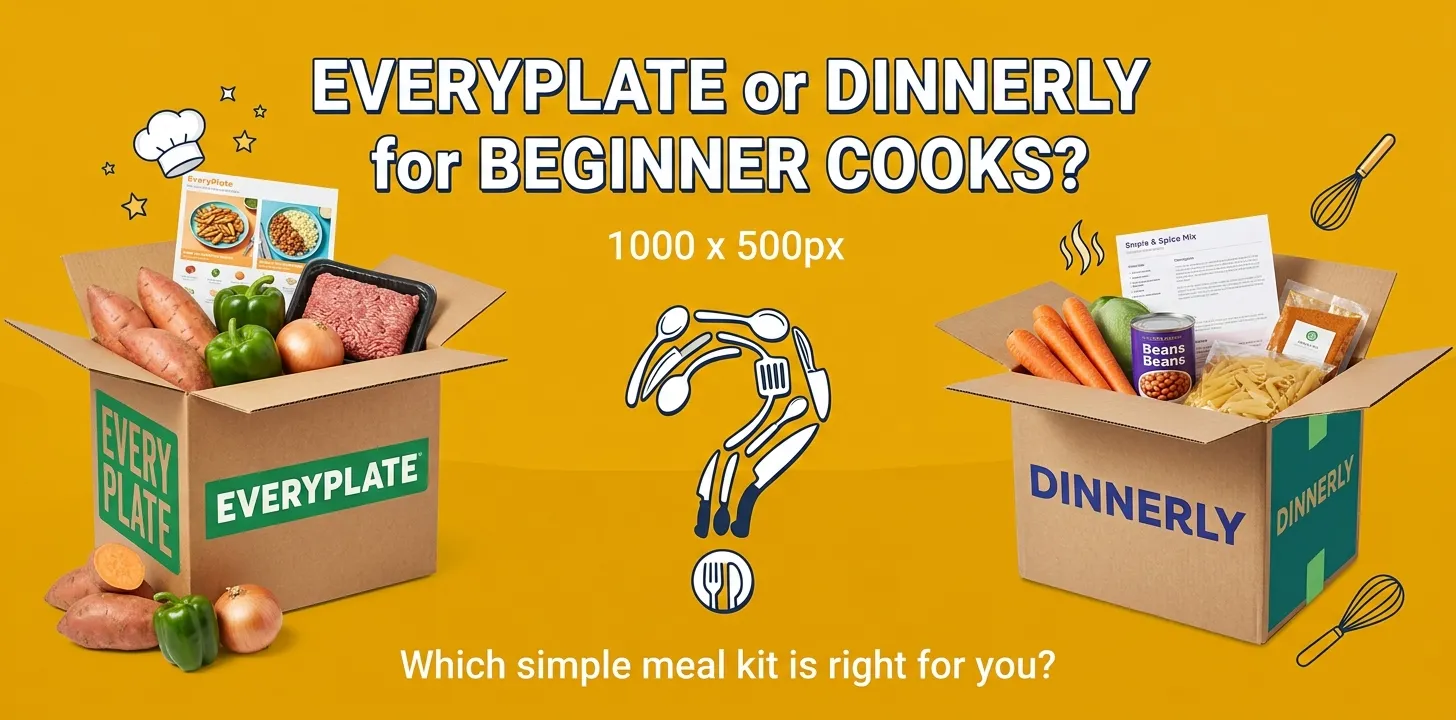
But not every budget meal kit feels the same in the kitchen. EveryPlate and Dinnerly are both designed around affordable, simple home cooking, but Dinnerly has the edge for absolute beginners who want the fewest steps and least prep. EveryPlate is a better fit if you want beginner-friendly recipes plus printed recipe cards and more menu variety.
EveryPlate vs. Dinnerly for beginner cooks
For a first-time cook, Dinnerly is usually the easier starting point because its recipes focus on simple preparation and fewer ingredients. EveryPlate is also beginner-friendly, but some meals involve a little more chopping, seasoning, or cooking. The better choice depends on whether your top priority is maximum simplicity or a more traditional meal-kit experience.
| Factor | EveryPlate | Dinnerly |
|---|---|---|
| Beginner-friendly | Yes | Yes |
| Recipe style | Simple to moderate | Very simple |
| Prep | Usually straightforward | Usually minimal |
| Recipe access | Printed cards and digital options | Primarily digital |
| Cooking time | Often around 25–40 minutes, depending on recipe | Many meals are designed for about 30 minutes or less |
| Menu variety | 35+ weekly recipes currently advertised | Large rotating menu |
| Best for | Beginners who want guidance and variety | Beginners who want fewer steps |
| Main drawback | Some recipes require more prep | Digital instructions may be less convenient |
EveryPlate currently advertises 35+ weekly recipes and describes its meals as easy to cook. Dinnerly has also built its service around simple, low-prep meals, making it a strong option for someone who does not feel confident in the kitchen.
Why Dinnerly may be easier for a first-time cook
Dinnerly’s biggest advantage is simplicity.
When you are learning to cook, every extra task can make a recipe feel harder than it really is. Chopping several vegetables, preparing multiple sauces, using several pans, and cooking different ingredients at the same time can be a lot to manage.
Dinnerly generally keeps recipes less complicated. That can make it easier to focus on basic skills such as:
- Cutting vegetables safely
- Measuring ingredients
- Heating a pan
- Browning meat
- Boiling or simmering
- Following cooking times
- Learning when food is done
That makes Dinnerly especially useful if you have little or no cooking experience.
The digital recipe system is the main trade-off
Dinnerly’s simpler approach comes with one drawback for some beginners: recipes are accessed digitally rather than relying on a traditional printed recipe card in the box.
That may not bother you if you already keep your phone nearby while cooking. But if you prefer putting a recipe card on the counter and checking it as you work, EveryPlate has an advantage.
For a new cook, that small difference can matter more than it sounds.
Why EveryPlate can be better for learning to cook
EveryPlate is still a beginner-friendly meal kit, but it can give you a slightly broader cooking experience.
Its current site describes the service as offering easy-to-cook recipes and a rotating menu of 35+ recipes. Some comparisons also find EveryPlate recipes a little more involved than Dinnerly’s simplest meals.
That is not necessarily a bad thing.
If you already know how to boil pasta or cook eggs but want to become more comfortable making complete dinners, EveryPlate can help you practice more skills without requiring you to plan the entire meal yourself.
You still get pre-portioned ingredients and recipe instructions, so you are not starting from an empty kitchen.
Printed recipes can help beginners
EveryPlate has an advantage if you like physical instructions. Current comparisons report that EveryPlate provides printed recipe cards, while Dinnerly primarily uses digital recipe instructions.
For example, imagine you are making dinner while your hands are wet or covered with food. Looking down at a card can be easier than repeatedly unlocking your phone.
This is a small convenience, but beginners often benefit from anything that reduces distractions.
Which one is easier to cook?
Dinnerly gets the edge for pure cooking simplicity.
Its focus on simple recipes means you are less likely to face a long list of ingredients or complicated preparation. That can reduce stress when you are still learning basic kitchen skills.
EveryPlate is not difficult, though. It is better described as easy to moderate, depending on the recipe you choose.
If you are completely new to cooking, start with meals that have:
- One-pan or one-pot cooking
- Few ingredients
- Short prep times
- Familiar foods
- Simple cooking methods
- No complicated sauces
- No advanced knife work
The specific recipe you choose can matter almost as much as the meal-kit brand.
EveryPlate or Dinnerly: which is better for learning basic cooking skills?
This depends on what you want to learn.
Choose Dinnerly if your first goal is confidence. Simple meals let you practice the basics without having too many things happening at once.
Choose EveryPlate if your goal is confidence plus variety. You may encounter a wider mix of cooking techniques while still having the ingredients and instructions organized for you.
A beginner does not need the most impressive recipe. The best first recipe is one you can finish without feeling overwhelmed.
What should a beginner look for in a meal kit?
The cheapest meal kit is not automatically the best choice for someone learning to cook.
Look at the recipe itself before choosing it. A beginner-friendly meal should have a clear sequence and manageable prep.
1. Short ingredient lists
Fewer ingredients usually mean fewer things to measure, chop, and cook.
This does not mean every meal needs to be extremely basic. It simply gives you fewer opportunities to lose track of what you are doing.
2. Simple cooking methods
Recipes that use familiar methods are easier to learn from.
Good starting points include:
- Baking
- Roasting
- Stir-frying
- Pan-cooking
- Boiling
- Simmering
You can move to more advanced techniques later.
3. One or two cooking steps at a time
A recipe becomes harder when several foods need attention at once.
As a beginner, look for instructions that let you finish one task before moving to the next.
4. A reasonable cooking time
A meal that takes 25–30 minutes may feel much easier than one that requires an hour.
Keep in mind that advertised cooking times are not always the same as your actual time. A beginner may need extra time to read instructions, chop ingredients, or clean up.
A realistic beginner example
Imagine you have only cooked eggs, pasta, and frozen foods before.
A Dinnerly meal with a few ingredients and one main cooking method may be a comfortable first step. You can focus on getting the pan hot, cooking the main ingredient properly, and following the timing.
After a few meals, you may feel ready for something slightly more involved.
That is where EveryPlate can make sense. A meal with a protein, vegetable, starch, and simple sauce can help you practice several basic skills while still giving you a clear recipe to follow.
The goal is not to become an expert after one box. The goal is to make the next meal feel easier than the last one.
What about cost?
Both services compete in the budget meal-kit category, but advertised prices can change based on the plan, number of servings, promotions, and shipping.
EveryPlate currently says plans start at $5.99 per serving, with introductory offers that can reduce the first box to as little as $2.99 per serving. Its current listed shipping fee is $10.99 per box.
Because promotions change, do not compare the first-box discount alone. Look at the regular price, shipping, number of servings, and number of meals you will actually use.
A simple way to compare your real cost is:
Total weekly box price + shipping ÷ number of servings = your effective cost per serving.
This is more useful than looking only at a promotional headline.
Which meal kit is better for a college student learning to cook?
If you are a college student with very little cooking experience, Dinnerly can be appealing because simple recipes may be easier to fit into a busy schedule.
But there is another factor: your kitchen.
If you have only a small kitchen, limited cookware, or shared cooking space, choose meals that use one pan or one pot. A complicated recipe can become frustrating when you do not have much counter space.
EveryPlate may be a better choice if you want more menu variety and like having printed recipe instructions available. Dinnerly may be better if you mainly want to make a basic dinner with as little fuss as possible.
Which should you choose if you hate cooking?
If you dislike cooking but want to make your own meals, Dinnerly is probably the better starting point.
Its simpler recipes can reduce the amount of work between opening the box and sitting down to eat.
But there is an important distinction: neither service removes cooking completely. These are meal kits, not fully prepared meals. You still need to prepare and cook the food.
If even 20–30 minutes of cooking sounds unpleasant, a meal kit may not solve the problem.
Which should you choose if you want to become a better cook?
If your goal is to build cooking skills, EveryPlate may have the slight advantage.
Its recipes can expose you to a broader range of basic cooking tasks while still keeping the process manageable. The printed recipe cards can also make it easier to follow the instructions while you cook.
Dinnerly is better when your main goal is getting dinner done simply.
EveryPlate is better when you want the meal kit to also serve as a gentle introduction to cooking.
The easiest way to choose your first box
Do not pick your first meal based only on the brand.
Instead, look through the current menu and choose two or three recipes that look familiar and manageable. Avoid recipes that require several pans, lots of chopping, or cooking multiple foods at the same time.
For your first meal, choose something you can understand just by reading the recipe.
That first successful dinner matters. Once you realize you can follow a recipe from start to finish, the next meal usually feels less intimidating.
Frequently Asked Questions
Is Dinnerly easier than EveryPlate for beginner cooks?
Generally, yes. Dinnerly focuses heavily on simple, low-prep recipes, while EveryPlate can have recipes that require slightly more preparation.
Does EveryPlate include recipe cards for beginners?
Yes. Current comparisons report that EveryPlate includes printed recipe cards, while Dinnerly primarily provides recipes digitally through its website or app.
Which is better for someone learning to cook, EveryPlate or Dinnerly?
Dinnerly is the better starting point if your biggest concern is keeping cooking simple. EveryPlate may be better if you want to learn more cooking skills while still using pre-portioned ingredients and guided recipes.
Final verdict
Dinnerly is the better pick for absolute beginners who want the simplest cooking experience. Its straightforward recipes can make the first few meals less stressful.
EveryPlate is the better pick for beginners who want more variety, printed recipe guidance, and a little more practice with everyday cooking. It remains accessible without being limited to the most basic recipes.
My practical tip: choose the service with the easiest-looking first three meals, not just the lowest advertised price. Your first few cooking experiences should build confidence, not make you feel like you are taking a cooking class.