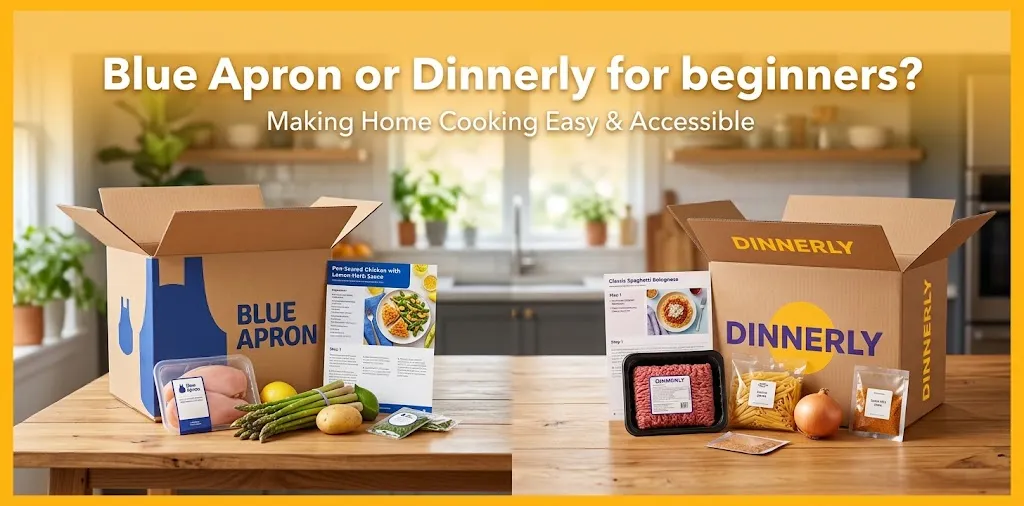
Blue Apron or Dinnerly for beginners?
If you are new to meal kits, both Blue Apron and Dinnerly can make cooking at home easier. But they are designed with slightly different priorities. Dinnerly is usually the better pick for a beginner who wants simple, low-effort meals, while Blue Apron is a stronger choice if you want to learn more cooking skills and try more involved recipes.
Blue Apron vs. Dinnerly for beginners
For most first-time cooks, Dinnerly is the easier starting point because its recipes focus heavily on simple preparation, familiar meals, and shorter cooking times. Blue Apron is also beginner-friendly, but its classic meal kits can involve more chopping, cooking steps, and techniques. The best choice depends on whether you want the easiest possible dinner or a meal kit that helps you build cooking confidence.
| Factor | Blue Apron | Dinnerly |
|---|---|---|
| Beginner friendliness | Very good | Excellent |
| Recipe style | Simple to more involved | Mostly simple and familiar |
| Cooking practice | Better | Basic |
| Quick meals | Strong | Strong |
| Recipe variety | High | Very high |
| Typical current meal-kit price | Often higher | Lower |
| Best for | Beginners who want to learn | Beginners who want less work |
| Overall beginner pick | ⭐⭐⭐⭐ | ⭐⭐⭐⭐⭐ |
Why Dinnerly may be easier for a first-time cook
Dinnerly puts a lot of attention on keeping dinner simple. Its current menu includes many meals in the 15–20 or 20–30 minute range, along with filters for fast and easy meals, cooking time, protein, dietary preferences, and other needs.
That matters when you are still learning your way around the kitchen.
A beginner may not know how long chicken should cook, how much to chop, or which pan to use. A recipe with fewer steps can make those first meals feel less stressful.
Dinnerly also says its meal kits start at $5.99 per person, although the final cost depends on the meals, plan, shipping, promotions, and other choices.
Another advantage is the type of food you can find on the menu. Current examples include tacos, burgers, pasta, stir-fries, ravioli, chicken bowls, and other familiar dishes.
For someone thinking, “I don’t cook much, and I just want dinner to work,” that is a useful combination.
Dinnerly is especially good if you want fewer cooking steps
A first meal kit should not feel like a cooking exam.
Dinnerly has many recipes that can be prepared in about 20–30 minutes, with some listed at 10–15 or 15–20 minutes.
For example, its menu includes quick options such as chicken bowls, beef bowls, pasta dishes, tacos, and other meals that rely on familiar cooking methods.
That makes it easier to build a routine:
- Read the recipe.
- Gather the ingredients.
- Prepare the ingredients.
- Cook them in the listed order.
- Serve and clean up.
You still have to cook, but the process is less intimidating.
Where Blue Apron has an advantage for beginners
Blue Apron should not be dismissed just because some of its meals require more work.
Its classic meal kits use pre-portioned ingredients and step-by-step recipes, and the company now also offers categories such as 20-minutes-or-less meals and Assemble & Bake options.
That gives beginners different ways to start.
You can choose a simple meal rather than jumping straight into a recipe that requires several cooking techniques.
Blue Apron’s current menu shows a wide range of cooking times. Some meals take around 15–20 minutes, while classic meal kits can take 25–45 minutes or longer.
So the important point is this:
Blue Apron is beginner-friendly, but not every Blue Apron recipe is equally beginner-friendly.
A new cook should pay attention to the cooking time and choose simpler recipes during the first few weeks.
Blue Apron can help you learn more cooking skills
This is where Blue Apron may beat Dinnerly for a beginner who wants to become a better home cook.
Some Blue Apron recipes involve techniques such as roasting, pan cooking, making sauces, preparing grains, or combining several components into one meal. Its recipe collection includes chef-designed meals with different ingredients and cooking styles.
That can be useful if your goal is not simply to get dinner on the table.
For example, a beginner might start with a 20-minute meal. After gaining confidence, they could try a more traditional meal kit that takes 30–45 minutes.
Over time, that can help you become more comfortable with:
- Chopping vegetables
- Cooking meat safely
- Following cooking times
- Using different pans
- Making simple sauces
- Roasting vegetables
- Cooking grains and pasta
- Seasoning food
Dinnerly can teach these basics too, but Blue Apron’s wider range of recipes gives you more room to experiment.
Which one has simpler recipes?
Dinnerly has the edge for simplicity.
Dinnerly currently promotes “5 Simple Steps” and offers more than 100 recipes each week. Its menu also lets customers filter for fast and easy meals.
Blue Apron also has plenty of easy choices. Its current menu specifically includes a “20 Minutes or Less” category, as well as Assemble & Bake meals designed for minimal prep.
The difference is that Blue Apron’s overall menu has a wider mix of difficulty and cooking styles.
So if you do not want to think much about recipe difficulty, Dinnerly is the safer beginner choice.
If you are willing to choose meals carefully, Blue Apron can work very well.
Which is better for someone who has never cooked before?
If you have almost no cooking experience, Dinnerly is probably the better first step.
The lower price can also make learning less expensive. Dinnerly currently advertises meals starting at $5.99 per person, while Blue Apron’s current menu shows many standard meal-kit prices around $9–$17 per serving, depending on the meal.
That does not mean every Dinnerly order will be cheaper than every Blue Apron order. Delivery, serving size, promotions, and menu selections can change the final price.
But if you are nervous about spending a lot while learning, Dinnerly’s lower starting price is worth considering.
A realistic beginner example
Imagine you are a college student or young adult who usually eats takeout and has never cooked a full dinner.
With Dinnerly, you could choose a simple chicken bowl or pasta dish that takes about 20–30 minutes. You follow the recipe one step at a time and learn basic skills without handling too many ingredients.
After a few weeks, you may feel comfortable trying more involved meals.
Now imagine you already know how to boil pasta, cook eggs, chop vegetables, and use a skillet. In that case, Blue Apron may be more appealing because you can use the meal kit to learn new techniques instead of only looking for the easiest recipes.
Neither situation makes one service universally better. Your current skill level matters.
Which meal kit is better for learning to cook?
Blue Apron is the better choice if learning is one of your main goals.
Dinnerly is built around convenience and simplicity. That is useful when you want to reduce the work involved in making dinner.
Blue Apron gives you more opportunities to practice different cooking methods because its menu includes traditional meal kits alongside quick meals and Assemble & Bake options.
A beginner who wants to improve could use this approach:
- Start with 20-minute meals.
- Choose recipes with familiar ingredients.
- Avoid recipes with too many separate components.
- Move to 30-minute meals once you feel comfortable.
- Try more involved recipes later.
This gives you a gradual learning curve instead of starting with a difficult recipe.
Which one is better for quick weeknight dinners?
Both are good, but Dinnerly has a slight advantage for someone who wants simple weeknight cooking.
Its current menu contains many meals in the 15–30 minute range.
Blue Apron also has a strong selection of fast meals. Its current site highlights meals that take 20 minutes or less and says many options can go from fridge to table in 45 minutes or less.
The difference is that Blue Apron gives you more choices between very easy meals and more traditional cooking projects.
If your main thought is “I get home tired and want dinner without much effort,” start with Dinnerly.
If your thought is “I have 30–45 minutes and want to practice cooking,” Blue Apron may be more useful.
Which one gives beginners more room to grow?
Blue Apron wins here.
Dinnerly is excellent when your priority is keeping dinner easy. But once you become comfortable with basic cooking, you may want recipes that teach you something new.
Blue Apron’s current selection includes everything from quick meals to classic meal kits and Assemble & Bake dishes.
That means you can stay with the service while gradually increasing the challenge.
It also offers a no-subscription purchasing model, according to its current site, so you can order what you want without needing a traditional ongoing subscription.
That’s a useful change for people who do not want to commit before trying a service.
What should beginners look for when choosing a meal kit?
The cheapest meal kit is not automatically the easiest one.
Before placing your first order, check these five things:
Cooking time: Look for 15–30 minute recipes at first.
Number of steps: Fewer steps usually mean less stress for a new cook.
Ingredients: Choose meals with ingredients you recognize.
Cooking method: Skillet, sheet-pan, pasta, and simple bowls are often easier starting points than recipes with several separate components.
Your own kitchen: Make sure you have basic equipment such as a knife, cutting board, skillet, saucepan, baking sheet, measuring tools, and a way to heat food safely.
One more tip: read the recipe before you start cooking. Knowing the full process can prevent the common beginner mistake of discovering halfway through that something needed to be prepared earlier.
Blue Apron or Dinnerly: which should you choose?
The easiest way to decide is to match the service to your goal.
Choose Dinnerly if:
- You have very little cooking experience.
- You want simple recipes.
- You prefer familiar meals.
- You want to keep meal-kit costs lower.
- You do not want dinner to take much time.
- You mainly want help getting dinner on the table.
Choose Blue Apron if:
- You already know a few basic cooking skills.
- You want to learn more.
- You enjoy trying different flavors.
- You want access to both quick and more involved meals.
- You like step-by-step meal-kit cooking.
- You want more room to increase the difficulty over time.
For a true beginner, Dinnerly is the better starting point for simplicity. Blue Apron is the better starting point for learning and building cooking skills.
That distinction is more useful than simply calling one service “better.”
What beginners should avoid on their first order
Your first meal-kit experience should be easy enough that you finish the meal feeling confident.
Avoid choosing several difficult recipes at once.
You may also want to avoid recipes that require many separate cooking stages, unfamiliar ingredients, or long cooking times until you understand how the recipes are written.
Instead, choose two or three simple meals.
For your first box, a good mix could be:
- One pasta or rice dish
- One skillet or bowl meal
- One quick recipe that takes about 20 minutes
This gives you practice without making the entire week feel like a cooking project.
Frequently Asked Questions
Is Dinnerly easier than Blue Apron for beginners?
Generally, yes. Dinnerly focuses heavily on simple, affordable meals, and its current menu includes many recipes in the 15–30 minute range. Blue Apron also offers quick and easy meals, but its wider menu includes more involved recipes.
Is Blue Apron good for someone who cannot cook?
Yes. Blue Apron uses pre-portioned ingredients and step-by-step recipes, and it currently offers quick meals and Assemble & Bake options for people who want less preparation. Beginners should start with the simpler recipes rather than choosing the most involved meal on the menu.
Is Dinnerly cheaper than Blue Apron?
Dinnerly generally has the lower advertised starting price. Dinnerly currently lists meals starting at $5.99 per person, while Blue Apron’s current menu shows many meal-kit prices above that level, although actual costs vary by meal, order size, shipping, and promotions.
Final verdict
If you are asking “Blue Apron or Dinnerly for beginners?”, start with Dinnerly if your biggest concern is keeping cooking simple, affordable, and low-stress.
Choose Blue Apron if you see your meal kit as a way to learn cooking while making dinner. Its broader mix of quick meals, traditional meal kits, and more involved recipes gives you more opportunity to build skills over time.
A practical tip: whichever service you choose, do not judge it by the hardest recipe in the menu. Pick two or three beginner-friendly meals for your first box and build your cooking skills gradually.