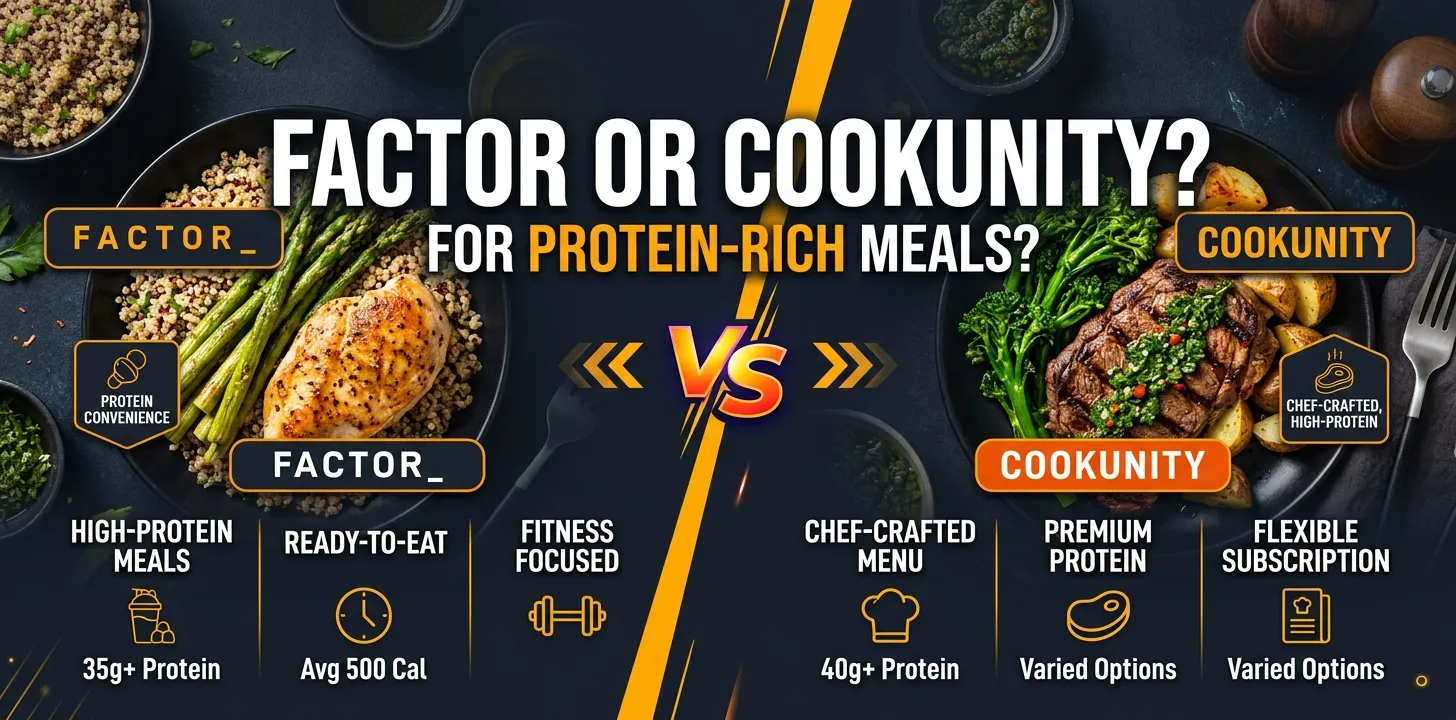
Factor or CookUnity for protein-rich meals?
If protein is the main reason you are comparing prepared meal delivery services, Factor is usually the better fit for structured high-protein eating. Factor has a dedicated High Protein option with meals containing at least 30 grams of protein, with some reaching 50 grams or more. CookUnity also offers Protein Boost meals, generally around 25–30+ grams per serving, but its main strength is chef-driven variety and flavor.
For most people, the choice comes down to one question: Do you care more about predictable protein numbers or a wider range of chef-created meals?
Factor vs. CookUnity for Protein-Rich Meals
Both services deliver fully prepared meals that only need heating. The difference is how each service approaches nutrition.
| Feature | Factor | CookUnity |
|---|---|---|
| High-protein focus | Strong | Strong |
| Protein per meal | 30g+; some meals reach 50g+ | About 25–30g+ on Protein Boost meals |
| Nutrition information | Full nutrition details | Full macro details |
| Dedicated high-protein option | Yes | Yes |
| Meal style | Dietitian-approved, chef-prepared | Chef-crafted |
| Menu approach | Nutrition-focused choices | Large chef-created variety |
| Cooking required | No | No |
| Best fit | Protein and macro tracking | Protein plus food variety |
Factor currently says its High Protein meals provide at least 30 grams of protein per serving, with some meals offering 50 grams or more. CookUnity’s dedicated high-protein page describes Protein Boost meals as providing 25–30+ grams per serving.
That difference matters if you are trying to make every main meal reliably protein-heavy.
Why Factor Has the Edge for Protein
Factor is more clearly built around nutrition targets.
Its current High Protein offering is designed around meals with 30g or more of protein, and Factor says some choices reach 50g+. You can also see nutrition information before ordering, including protein, calories, carbohydrates, fat, and fiber.
Factor also combines its high-protein choices with other nutrition preferences. For example, its menu includes High Protein, Calorie Smart, Keto, and Vegan + Veggie options.
That makes Factor useful when your goal is not simply “eat more protein,” but something more specific such as:
- Choose meals with 30g+ protein.
- Keep calories in a certain range.
- Limit carbohydrates.
- Track protein and other macros.
- Get a prepared meal after a busy day.
Factor’s meals are also fully cooked and designed to be heated in about two minutes.
Factor’s biggest advantage: easier protein planning
Suppose you want three prepared meals during a busy workweek and want each main meal to contribute a meaningful amount of protein.
With Factor, the dedicated High Protein category makes that shopping process simpler. You can look for meals that meet the stated protein threshold instead of opening every meal and searching for a suitable number.
That can save time if nutrition tracking is the main reason you are ordering prepared meals.
Where CookUnity Stands Out
CookUnity takes a different approach.
Its Protein Boost meals are designed to provide about 25–30+ grams of protein per serving, while the wider service focuses heavily on chef-created meals and variety. CookUnity says its meals include nutrition information for protein, carbohydrates, fat, and calories.
Its current menu highlights meals from more than 100 chefs, giving subscribers a much more chef-driven experience.
That matters if you want high-protein meals but don’t want every meal to feel like standard fitness food.
For example, CookUnity’s current high-protein menu includes dishes such as chicken shawarma, shrimp tacos, steak, chicken curry, and other globally inspired meals.
CookUnity’s biggest advantage: protein without boring meals
A person who gets tired of repeating chicken, rice, and vegetables may prefer CookUnity.
You can still look for protein-rich meals, but you have a broader chef-created menu to choose from. CookUnity says customers can select between 4 and 16 meals per week and change their selections from week to week.
So CookUnity may make more sense when enjoying the food is just as important as hitting a reasonable protein target.
Which Has More Protein?
Factor has the stronger protein floor.
Factor’s current High Protein meals start at 30g of protein per serving, and the company says some options provide 50g or more. CookUnity’s Protein Boost meals are described as providing 25–30g+ per serving.
That does not mean every Factor meal contains more protein than every CookUnity meal. Individual meals vary, so you should always check the nutrition panel for the exact dish you plan to order.
The practical difference is the consistency of the high-protein category.
| If your target is… | Better fit |
| At least 30g protein per meal | Factor |
| 40–50g+ options | Factor |
| Moderate protein with lots of food variety | CookUnity |
| Easy macro checking | Factor |
| Chef-created meals with protein options | CookUnity |
Protein Quality Matters, Too
A high protein number does not tell you everything about a meal.
When comparing two dishes, also look at:
- Total calories
- Saturated fat
- Sodium
- Fiber
- Main protein source
- Portion size
- Added sauces and toppings
- The rest of your day’s food
For example, a meal with a large protein number may also be much higher in calories than another meal with slightly less protein.
Likewise, chicken, fish, eggs, dairy, tofu, beans, and other protein sources can all fit into a balanced eating pattern. The best choice depends on your overall diet and preferences.
Factor or CookUnity for Fitness-Focused Meals?
If your main goal is convenient meals that make protein tracking easier, Factor gets the advantage.
Factor specifically markets its fitness meals around 30g+ protein per meal, with some meals reaching 50g+. The meals are also dietitian-approved and ready to heat without meal prep.
CookUnity can still work well for an active person who wants more variety. Its fitness-focused offerings include protein-rich meals, and its current menu shows dishes such as salmon, chicken, pork, and other protein-centered options.
The difference is simple:
Factor is easier when protein targets drive your meal choices. CookUnity is more appealing when taste and variety drive your meal choices.
What About Vegetarians Looking for Protein?
This is a closer comparison.
Factor has plant-based options and says its menu can combine protein-focused and plant-based preferences. Its current vegetarian and vegan offerings include protein sources such as tofu, tempeh, legumes, and quinoa.
CookUnity also offers meals across different dietary preferences, and its large chef-created menu can provide plant-based choices.
For either service, do not assume that a vegetarian meal is automatically high in protein. Check the nutrition label for the exact meal.
A lentil, tofu, bean, or tempeh-based meal may provide useful protein, but the amount can vary widely by recipe and serving size.
Which Is Better for Everyday Convenience?
Both are designed to remove most of the work involved in meal preparation.
Factor says its meals arrive fresh and refrigerated and can be ready to eat after about two minutes of heating.
CookUnity also delivers fully prepared meals that can be heated and plated without the shopping, chopping, cooking, and cleanup required for a typical homemade meal.
So convenience is not the main reason to choose one over the other.
The more useful question is what you want that convenience to accomplish.
If it helps you stay consistent with a protein target, Factor has the clearer advantage. If it helps you avoid getting bored with your meals, CookUnity has the stronger case.
What About Price?
Price can change based on your plan, meal count, promotions, location, and current offers, so it is better to check the current checkout price before comparing totals.
CookUnity’s current high-protein page says plans start at $14 per meal.
Factor also uses plan-based pricing, and shipping or promotional offers can affect your final total. Its current site is advertising a new-customer promotion, but promotional terms can change.
For a fair comparison, calculate the final delivered cost per meal, rather than comparing advertised starting prices.
Two Simple Buying Scenarios
Scenario 1: You want predictable protein
Imagine you are busy during the week and want prepared lunches that reliably provide at least 30g of protein.
Factor is the easier choice because its High Protein meals are specifically positioned at 30g+ protein per serving. You can then check calories and the other macros for each meal before ordering.
Scenario 2: You want protein but hate repetitive meals
Now imagine you already eat enough protein but want convenient dinners with more interesting flavors.
CookUnity may be the better fit. Its Protein Boost selection gives you a way to prioritize protein while still choosing from a chef-driven menu with many different cuisines and dishes.
Frequently Asked Questions
Is Factor better than CookUnity for high-protein meals?
Yes, Factor is generally the stronger choice when hitting a specific protein target is the main goal. Its High Protein meals provide 30g+ of protein per serving, while CookUnity’s Protein Boost meals are generally listed at 25–30g+ per serving.
Does CookUnity have meals with 30 grams of protein?
Yes. CookUnity’s Protein Boost selection includes meals advertised at 25–30g+ of protein per serving, and individual meals can vary. Always check the nutrition information for the specific dish before ordering.
Can you get high-protein vegetarian meals from Factor or CookUnity?
Yes, both services offer plant-based choices, but the protein amount varies by meal. Factor specifically lists vegetarian and vegan meals that can use tofu, tempeh, legumes, and quinoa, so checking the protein value of each meal is still important.
The Bottom Line
Choose Factor if protein is your top priority. Its dedicated High Protein meals provide 30g+ of protein, some options reach 50g+, and its nutrition-first setup makes macro tracking easier.
Choose CookUnity if you want protein-rich meals with more chef-driven variety. Its Protein Boost meals generally provide 25–30g+ of protein, while its larger chef network gives you more room to choose meals based on flavor and cuisine.
My practical tip: look at the actual weekly menus before subscribing. Pick five to seven meals you would genuinely enjoy, then compare their protein, calories, and total delivered price. That gives you a much better answer than comparing the brands by marketing claims alone.